
Julianne Moore delivered a powerful call‑to‑action at the Cannes Film Festival. She used her moment on stage to challenge the industry’s long‑standing bias against women’s stories. Moore also demanded greater representation behind and in front of the camera.
Julianne Moore Speaks Out
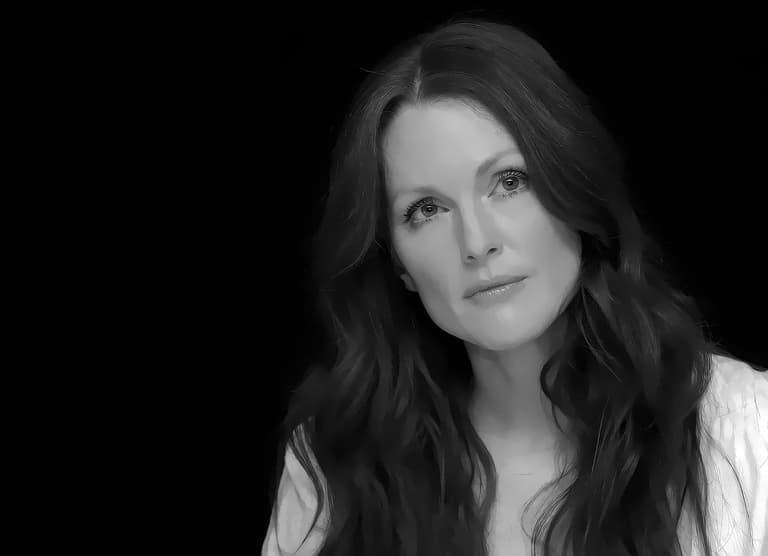
Accepting the Kering Women in Motion Award at Sunday night’s gala, Moore opened with a blunt declaration that set the tone for the rest of her speech.
She said, “I f****** love actresses.”
From there, she turned her focus to the cultural assumptions. They continue to shape which stories get told and who gets to tell them.
She said, “There is a cultural assumption, particularly in the United States, that women’s stories are less interesting or smaller.”
“Or that if we’re at the center of a narrative, we need to be strong or accomplishing something great, or doing something that is particularly male, if we want someone to watch us — if we want men to watch us. And I think that’s untrue.”
Women’s Perspectives
Moore explained that her belief in women’s perspectives isn’t theoretical – it’s rooted in her everyday life.
She said, “I see the women in my elevator, on the subway, and in the airport. If I need information, I approach a woman.”
“When my kids were little, I told them, if you’re ever lost or in trouble, to look for a lady, she will help you. I read books about women. My yoga group is all female, and all of my representatives, my agents, and my managers are female.”
The Crazy, Stupid, Love star stressed that her point wasn’t about excluding men. It’s about recognizing the value of women’s lived experiences.
She said, “I’m not saying this to be particularly binary.”
“Or to say the relationships I have with men or male‑identifying people are not important to me, but to celebrate the fact that female point of view matters, matters to me, and that’s paramount in storytelling.”
Drawn to Unseen Narratives
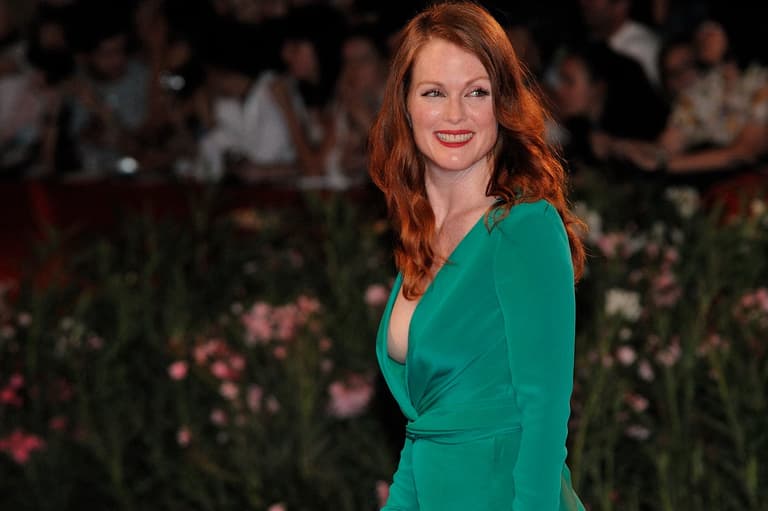
Moore said she is always drawn to narratives that explore where women feel unseen — and why.
She said, “I’m always curious about that narrative. I want to know where they feel invisible, why they feel invisible, and have we been cultured to only be seen by a particular audience, or to only value that gaze.”
She added that she often prefers observing over being observed.
Moore explained, “I’m also curious at times when I don’t want to be seen, when I want to avoid any gaze, and that’s a lot of the time. But I am always interested in what I want to see… what I experience through my own lens. And that’s the most important thing of all: what we as women see, and what we are here to celebrate tonight.”
Moore closed her speech with a clear message for the industry. “We need more female voices in our industry, more writers, more directors, more actresses to carry that vision forward.”