
Alanis Morissette is opening up about the long, complicated journey she’s taken through addiction, self‑regulation and emotional recovery. Morissette admits she spent years trying to control her inner world in ways that often left her feeling isolated.
Coping Mechanisms
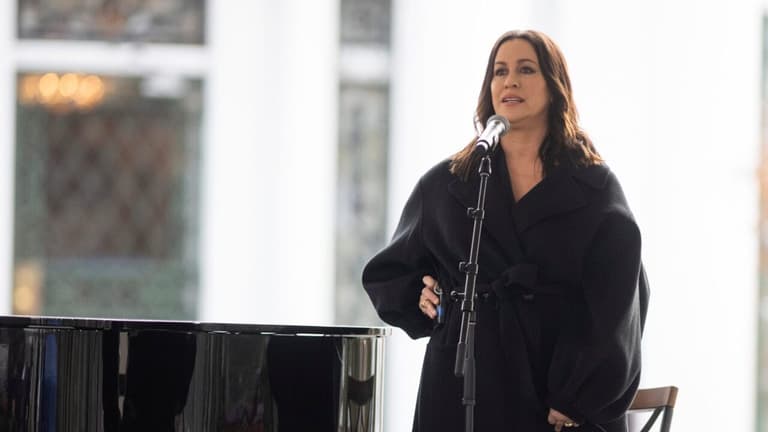
Speaking to Sunday Times Style magazine, the singer, who is a Highly Sensitive Person (HSP), said she cycled through different coping mechanisms before understanding what she was actually dealing with. She said, “I tried myriad ways to regulate, whether that was partying or working. I was a huge work addict, still in recovery. A lot of love addiction, which also had some sex addiction. And I see this with empaths.”
“We aren’t given a handbook about how to be responsible for this temperament. All I know is that I made absolutely no sense to most people for a very long time and it was lonely and painful but I persevered.”
“Now I feel myself making more sense to people – there’s a curiosity about what I’m talking about versus an immediate shutdown.”
Stabilizing Marriage
The 52‑year‑old says her marriage to Mario “Souleye” Treadway, whom she wed in 2010, has been one of the most stabilizing forces in her life. She explained that he never tried to change her or shrink her personality.
The Ironic hitmaker said, “There are just so many qualities in him that were slam-dunky. If I would talk about something on a date, typically the person would look at me quizzically like I was strange. It was the complete opposite with Souleye. He had zero desire to clip my wings.”
Juggling Motherhood

The couple has three children, Ever, 15, Onyx, nine, and Winter, six, and Morissette admits that juggling motherhood with a demanding career can leave her feeling like she’s falling short, even when she’s giving far more than she realizes.
She said, “After having children – and we’re an attachment family – I’ll fly out to do a show and instead of staying overnight I’ll fly home at 3am just to be with them…”
“There’s so much expectation for professional, career-orientated women to be everything — emotional, psychological, logistical, social.”
“My personal standard is to want to operate at 110 per cent in each area, so there’s this sense of failing, but if I do the math I’m operating at 700 per cent every day. Yeah, I’m looking into that.”